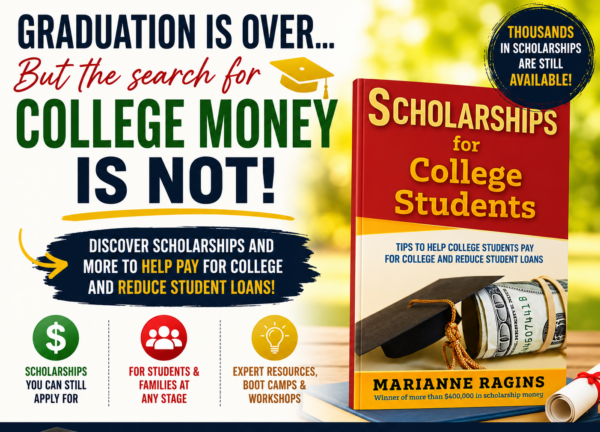
Graduation Is Over — But the Search for College Money Is Not
How Students Can Still Find Scholarships and College Funding After Graduation
Congratulations, graduates! The caps have been tossed, the photos snapped, and the celebrations are winding down. Now comes the big question: how are you going to pay for college? Whether you’ve already started the process or are just beginning to think about it, there are many options available to help you fund your education. Here’s what you can do next:
Apply for Scholarships—It’s Not Too Late!
- Scholarships aren’t just for high school seniors. Many organizations, companies, and colleges offer scholarships throughout the year, and some go unclaimed simply because no one applies. Local sources are a great place to start. See the chapter, “Finding Scholarships in Your Backyard” in Winning Scholarships for College. Marianne Ragins is a $400,000 scholarship winner and her daughter won over $600,000 in merit scholarships with $8,500 coming from local scholarship opportunities. Starting early, her 16 year old son just won two scholarships mostly based on efforts within the community and his school. Make sure to uncover what your community has to offer.
- Also check your college’s financial aid website and national scholarship databases such as scholarships.com for opportunities. You’re about to be a college student now, so make sure to check out opportunities specifically for college students. Also review Scholarships for College Students.
- Remember: scholarships are free money—you don’t have to pay them back!
Don’t Forget About Grants
- Grants, like scholarships, do not need to be repaid. The most common are federal grants such as the Pell Grant, but many states and colleges offer their own. Contact your school’s financial aid office or your state’s education department to see what’s available. See Winning Scholarships for College, chapter 5, for more information and to see a list of state education departments along with their contact information.
- The first step to accessing most grants is to complete the FAFSA (Free Application for Federal Student Aid). If you haven’t filled it out yet, do so as soon as possible.
- Some grants are based on financial need, while others may be tied to your intended major or background.
Consider Work-Study Programs
Explore State and Institutional Aid
- Many states and colleges offer their own grants, scholarships, and tuition assistance programs. Contact your school’s financial aid office or your state’s education department to see what’s available. See Winning Scholarships for College, chapter 5, for a list of state education departments.
- Some schools may require additional forms beyond the FAFSA, so check deadlines and requirements.
Look Into Military and Service Programs
- Programs like the National Guard, AmeriCorps, and Peace Corps can provide tuition assistance in exchange for service.
- The GI Bill and similar military benefits can also cover a significant portion of college costs if you choose to serve or if someone in your family has already served.
- See Winning Scholarships for College, chapter 27, for more information for more information about scholarships for veterans and their family members.
Think About Community College and Transfer Options
- Starting at a community college can drastically reduce your tuition costs. Many community colleges have agreements with four-year universities for easy credit transfer.
- This route allows you to save money while still working toward your bachelor’s degree.
- See Winning Scholarships for College, “Tips for Reducing Your College Expenses and Increasing Your Scholarship Chances,” chapter 37 for more information.
Use Loans Wisely
- Federal student loans (subsidized and unsubsidized) often have lower interest rates and more flexible repayment options than private loans. But make sure to explore. There may be other options with better rates.
- If you need more funds, Parent PLUS loans or private loans are options, but be cautious—these must be repaid with interest starting immediately.
- Borrow only what you need and understand the terms before committing.
Get a Job or Internship
- Many students work part-time during college or over the summer to help cover expenses.
- Some employers offer tuition reimbursement programs, so check if your workplace provides this benefit.
- Check out College Survival & Success Skills 101 for more information.
Explore Creative Funding Options
- Crowdfunding and income-share agreements (offered by specific colleges and universities) are newer ways students are funding their education. Each comes with its own risks and requirements, so research thoroughly before committing.
- See Last Minute College Financing Guide for more information about innovative ways to find college funding.
Final Tips
- Start by filling out the FAFSA, even if you think you won’t qualify for aid—it’s the gateway to most grants, work-study, and some scholarships.
- Meet with your college’s financial aid office for personalized advice and to make sure you’re not missing any opportunities.
- Keep applying for scholarships throughout your college years—many are available to current students, not just incoming freshmen. Scholarships for College Students has information that can help you along the way.
Remember, you’re not alone in this process. There are resources and people ready to help you navigate your options and make college affordable. Marianne Ragins, a $400,000 scholarship winner and bestselling author, offers a wealth of resources, workshops, and boot camps designed to help students and parents find, apply for, and win scholarships and other financial aid. See below to learn more.
Explore Marianne Ragins’ Scholarship Boot Camps and Workshops
Books and Tools for Scholarship Success*
Marianne Ragins, $400,000 scholarship winner and best-selling author, has written many guides and planners to help you at every stage of your scholarship journey, including:
- Winning Scholarships for College
- 10 Steps for Using the Internet in Your Scholarship Search
- The Scholarship & College Essay Planning Kit
- College Survival & Success Skills 101
- The Scholarship Monthly Planner
- Last Minute College Financing Guide
Combo packs are available if you want a comprehensive toolkit to streamline your search and application process. See www.scholarshipworkshop.com/bookstore to explore more. Or visit Amazon for a list of Marianne’s best scholarship and college resources*.
Why Choose Marianne Ragins’ Resources?
- Proven Success: Marianne won over $400,000 in scholarships herself and has helped hundreds of students win scholarships and minimize college debt. In 2025, her daughter won over $622,000 in college scholarships. In 2024, one student who attended several of her workshops and boot camps earned 2 full rides and an additional $12,000 in outside scholarships.
- Expert Guidance: She’s served on scholarship committees and knows exactly what makes an application stand out.
- Accessible for All: Resources are available for high school students, current college students, nontraditional students, and adults returning to school.
- Flexible Formats: Choose from live virtual workshops, online boot camps, eBooks, books, and guides to fit your schedule.
Get Started Today
Final Tip: The earlier you start, the more opportunities you’ll find. Even after graduation, there are scholarships and grants available—don’t miss out on free money for college!
|